

“A normal mammogram is reassuring, but it isn't the whole story. Your breast density, your family history, and your personal risk all shape what good screening actually looks like for you.”
- DR JO MACKSONBreast Health assessments
Who is this for?
This appointment is for women with a new breast symptom, such as a lump, pain, nipple discharge, or skin change, and for women who want a clearer discussion about breast screening, breast density, family history, or breast cancer risk. It can be especially helpful if you have dense breasts, a strong family history, or questions about the screening approach that best fits you.
What to expect
We may take a breast history, perform a breast examination, talk through breast self-awareness, and explain any next steps clearly. We can also discuss screening options such as mammogram, ultrasound, contrast enhanced mammograms, MRI and the new breast cancer blood test. Where relevant, we can review breast density, family history, genetic risk, and advise on if further testing may be worth considering.
What to bring
Please bring any previous breast imaging reports, including mammogram, ultrasound, or MRI results, as well as any biopsy reports or specialist letters. It also helps to bring details of your family history, including which relatives were affected by breast, ovarian, prostate, or pancreatic cancer and, if known, the age at diagnosis. For most accurate advice on risk, performing a free online risk assessment via iPrevent is helpful.
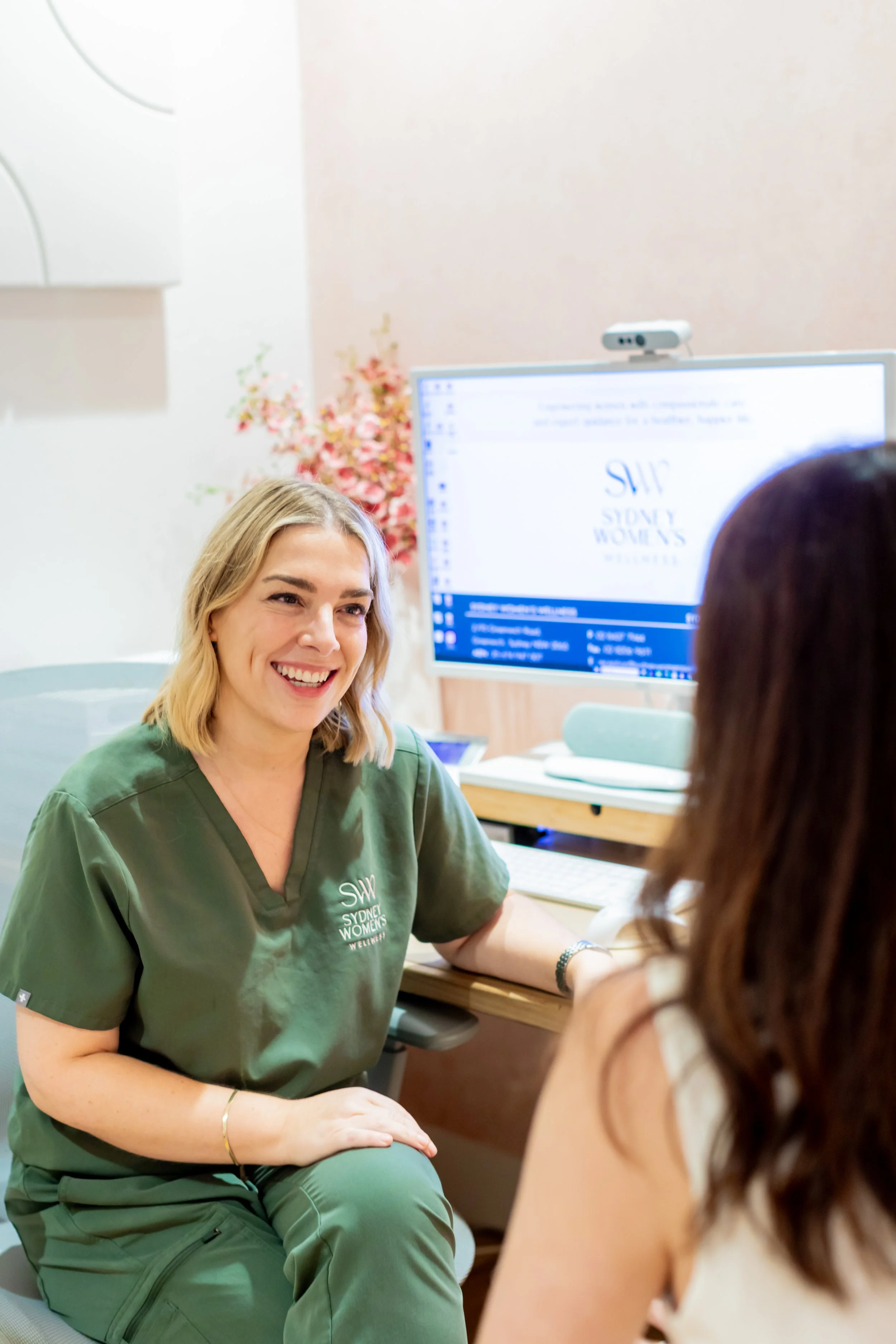
Breast Health
In Australia, women aged 50–74 are actively invited to screen via 2D mammogram through BreastScreen every two years, however you can start as early as 40. This is for population screening, and so depending on risk factors including family history and breast density, some women should start screening earlier, more frequently, and possibly with supplementary imaging modalities like ultrasound or contrast enhanced studies including CEM or MRI. We can discuss personalised breast screening plans in a breast health consult.
A mammogram is a low-dose X-ray of the breast, either in 2D or 3D, used in screening to detect early changes that may indicate breast cancer. Ultrasound uses sound waves to look at breast tissue, and is used to investigate specific lumps or to supplement mammogram when screening dense breast tissue. While both are useful modalities, they are best used together for a complete picture, one does not replace the other.
While many lumps are benign (not cancerous), it is still important to have any new breast change examined as soon as possible and, if needed, investigated further with imaging and/or biopsy. Please call our practice to arrange your appointment as we prioritise these reviews to ensure you receive a clinical examination and imaging referral as soon as possible.
Breast density is diagnosed by mammogram, not by touch, appearance or cup size, and many BreastScreen services in Australia now report it. Dense tissue can make cancers harder to spot on a mammogram alone, so if your report mentions increased breast density (BI-RADS C or D), speak with your GP about whether supplemental screening, such as ultrasound, Breastest Plus, CEM or MRI for higher-risk women, is right for you.
BREASTEST Plus is a specialised blood test that may be used alongside breast imaging to provide additional information during breast cancer assessment, particularly for some women with dense breast tissue where imaging can be more difficult to interpret. It is not recommended for every patient, but if you are interested in how it might be used in your personal screening book an appointment to discuss.
A strong family history of breast cancer can influence when screening should begin, how often it should occur, and which tests are most appropriate. Based on your family history, including which relatives were affected and the age at which they were diagnosed, we can assess your risk, discuss whether genetic testing may be helpful, and develop a personalised screening plan. This may include earlier or more frequent mammography, ultrasound, contrast-enhanced mammography, or breast MRI. For women at higher risk, we can also coordinate referral to a public high-risk breast clinic or to a private breast physician or surgeon, depending on your preference.
Yes, absolutely. Around 9 in 10 women diagnosed with breast cancer have no family history, and only about 5% of breast cancers are explained by an inherited gene fault such as BRCA1 or BRCA2.
Mammograms use a very small dose of radiation, and modern equipment is designed to use the lowest dose possible while still producing a high-quality image. For women having routine breast screening, mammography remains the most effective screening test for finding breast cancer early, and the benefits outweigh the risks of radiation exposure. Ultrasound can be very useful in some situations, particularly to investigate a specific finding or as an additional test, but it is not usually a replacement for mammography in routine screening.
Yes. Most women with breast implants can still have regular mammograms. It is important to let the screening service know when you book and again at your appointment, so the radiographer can use specialised techniques to image as much breast tissue as possible around the implants. Women with implants may need a few extra images, which can mean slightly more radiation exposure, but the dose remains low and the benefits of screening still outweigh the risks.