Being Breast Aware: A Key Step in Early Detection
Breast awareness is one of the simplest, most useful health habits a woman can have, and somewhere along the way it got needlessly complicated. For years, women instructed to perform “Self Breast Examination” they were handed elaborate instructions for a monthly self-examination, complete with diagrams, set dates and a quiet worry that doing it wrong might cost them. For many, the result was anxiety rather than confidence. And the data from extensive research showed these formal self-exams did not reduce breast cancer mortality rates. Instead, they often cause unnecessary anxiety, false alarms, and unneeded biopsies.
The current advice is far simpler and far more practical. You do not need a special technique or a schedule. You simply need to know what is normal for you, so that you notice if something changes.
You are the world expert on your own breasts. No one is better placed to notice when something is different.
What "normal" looks like
Breasts are naturally lumpy, asymetric and they change over the months and years. They shift across your menstrual cycle, often feeling tender or fuller in the days before your period. They change with pregnancy, breastfeeding, weight and age. There is a wide range of normal, and yours will not look or feel like anyone else's. The goal is not to measure yours against a textbook. It is to become familiar enough with your own that a real change stands out.
The easiest way to do this is to pay attention during things you already do: in the shower, getting dressed, putting on moisturiser. No ritual, no rules, perfection not required.
Changes worth getting checked
See your GP if you notice any of the following:
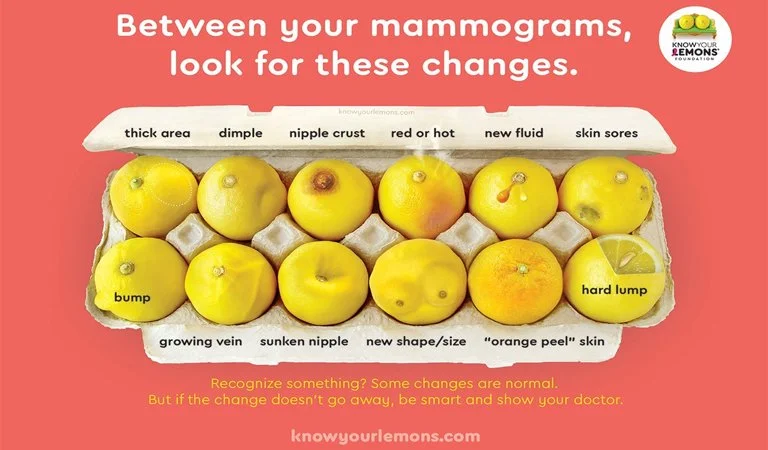
a new lump or thickening, particularly if it is only in one breast
a change in the size or shape of a breast
changes to the nipple, such as it turning inward, or any discharge, especially if it is blood-stained
changes to the skin, like dimpling, puckering or redness
a new pain that does not settle and is not linked to your cycle
Most breast changes are not cancer. Lumps are very often cysts or simply normal tissue, and many changes turn out to be completely benign. But the only way to know is to have it looked at, and the earlier anything is found, the better the outcomes tend to be. Getting something checked is never an overreaction.
“up to 75% of breast cancers in younger women are self-detected, and for older women who are actively screening around 20-30% are found between mammograms”
Awareness is not the same as screening
Knowing your breasts is one layer of protection. Screening mammography is the next, and the two work together. In Australia, BreastScreen offers free mammograms and routinely invites women aged 50 to 74, with the program available from age 40. If you have a family history of breast cancer, dense breast tissue, or other risk factors, the right screening plan for you may look different, so it is worth a conversation with us about what makes sense for you.
Being breast aware is not about living in fear, or examining yourself by the calendar. It is about knowing your own body well enough to act early if something changes. That is not anxiety. That is agency.